What are peptides? Definition, structure and research use
What are peptides? This guide explains how amino acids join into peptide chains, how peptides are synthesised and tested, and why research, cosmetic and medicinal peptides follow different rules.
What are peptides? In chemistry, a peptide is a short chain of amino acids held together by peptide bonds. Chemists usually speak of a peptide when a chain has between 2 and about 50 amino acids, and of a protein when the chain is longer. This border is a convention and not a sharp line. This guide covers the chemistry, natural examples, the three main product worlds and the way laboratory peptides are made, tested and stored.
What are peptides? The short definition
A peptide is a molecule built from amino acids that are linked in a fixed order. The order of the amino acids is called the sequence, and the sequence decides the chemical identity of the peptide. Swapping the position of just two amino acids already produces a new substance.
The term covers a wide range of molecules. The smallest peptide is a dipeptide made of two amino acids. Some peptide hormones in the body have 30 to 50 amino acids. Above that size, most chains fold into a stable three-dimensional structure, and scientists then use the word protein. Insulin shows that the line is not exact: it has 51 amino acids and is described as a peptide hormone in some textbooks and as a small protein in others.
How a peptide is built: amino acids and the peptide bond
Every amino acid has the same basic frame. A central carbon atom carries an amino group (NH2), a carboxyl group (COOH), a hydrogen atom and a side chain. The side chain is different for each amino acid. Living cells use 20 standard amino acids to build peptides and proteins.
Two amino acids connect when the carboxyl group of the first reacts with the amino group of the second. The reaction releases one molecule of water, so chemists call it a condensation. The new link is an amide bond, and in this context it carries the name peptide bond. It is flat and fairly rigid, which limits how the chain can bend.
A chain of amino acids has two different ends. The end with a free amino group is the N-terminus, and the end with a free carboxyl group is the C-terminus. By convention, a sequence is always written from the N-terminus to the C-terminus. Each amino acid has a three-letter code and a one-letter code. The copper-binding tripeptide GHK can therefore be written as Gly-His-Lys or simply as GHK.
Peptide size, names and chemical modifications
The number of amino acids gives a peptide its family name. A dipeptide has two, a tripeptide three, and a tetrapeptide four. Chains of up to about 20 amino acids are often called oligopeptides, and longer chains are polypeptides.
Many peptides are not simple linear chains. Chemists and nature both change the basic structure in several ways:
Cyclic peptides: the chain closes into a ring, either through a bond between the two ends or through a disulfide bridge between two cysteine side chains.
D-amino acids: almost all amino acids in nature have the L form. Replacing one of them with its mirror image, the D form, makes the chain harder for enzymes to cut.
C-terminal amidation: the carboxyl group at the end is replaced by an amide group. Many natural peptide hormones carry this change.
Fatty acid chains: a lipid tail attached to a side chain lets the peptide bind to albumin, a protein in blood plasma.
Metal complexes: some peptides hold a metal ion. GHK-Cu is GHK bound to a copper ion.
Each modification creates a new compound with its own molecular mass, so it must be confirmed in the analysis of every batch.
Peptides that occur naturally in the body
Peptides are not an invention of the laboratory. Every living organism produces them, either as products of their own genes or as fragments of larger proteins. A few well-known examples show how varied they are:
Glutathione is a tripeptide of glutamate, cysteine and glycine. Its first bond is unusual, because it uses the side chain of glutamate instead of the main chain. It is a central topic in redox research.
Oxytocin is a hormone of nine amino acids. A disulfide bridge closes part of the chain into a ring, and the C-terminus is amidated.
Insulin consists of two chains with 21 and 30 amino acids that are held together by disulfide bridges.
GHK is a tripeptide that was first isolated from human blood plasma in the 1970s. It binds copper ions and has since been studied in many laboratory models.
Natural occurrence does not mean that a synthetic copy is suitable for any purpose outside the laboratory. It only explains why researchers are interested in these sequences.
Research, cosmetic and medicinal peptides compared
The same class of molecule appears in three areas with very different rules, documentation and intended use.
| Aspect | Research peptides | Cosmetic peptides | Peptide medicines |
|---|---|---|---|
| Purpose | Reagents for laboratory studies | Ingredients in creams and serums | Prevention or treatment of disease |
| EU framework | No marketing authorisation; general chemical and product law | Regulation (EC) No 1223/2009 | Directive 2001/83/EC or the centralised EU procedure |
| Name used | Sequence or code name | INCI name | International non-proprietary name (INN) |
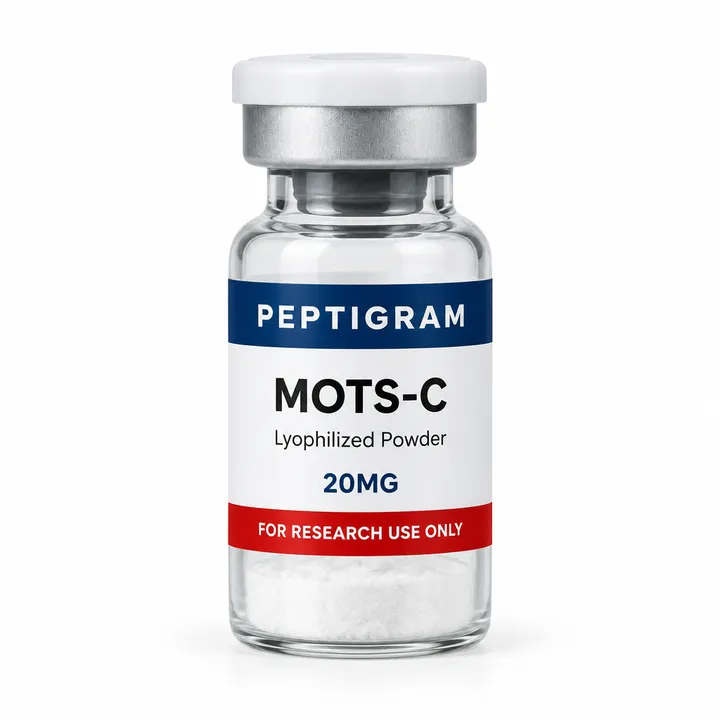
| Examples | BPC-157, MOTS-c | Palmitoyl pentapeptide-4, copper tripeptide-1 | Insulin, oxytocin |
| Label and claims | Research use only, no health claims | Cosmetic claims only | Approved product information |
Cosmetic peptides are listed under INCI names, the international naming system for cosmetic ingredients. Copper tripeptide-1, for example, is the INCI name for the GHK-copper complex. The EU Cosmetics Regulation (EC) No 1223/2009 requires a safety assessment for every cosmetic product and does not allow claims that a product treats or prevents disease.
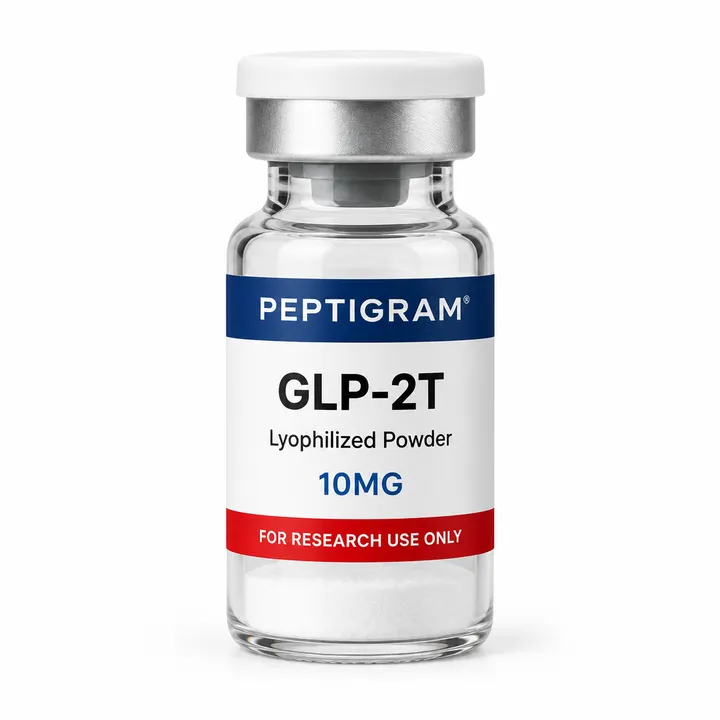
Peptide medicines go through clinical trials and need a marketing authorisation before they reach the market. Research peptides have no such authorisation. They are sold as laboratory reagents for research use only and are not intended for human or veterinary use.
How research peptides are made and tested
Most research peptides come from solid-phase peptide synthesis (SPPS). The American chemist Robert Bruce Merrifield introduced this technique, and his work was honoured with the 1984 Nobel Prize in Chemistry. The idea is simple: the first amino acid is anchored to small resin beads, and the chain grows one amino acid at a time, from the C-terminus towards the N-terminus. Protecting groups block reactive sites so that each new amino acid couples only at the right place. After each step, a simple wash removes the excess reagents.
When the sequence is complete, a strong acid cleaves the peptide from the resin and removes the protecting groups. The crude product still contains shorter and faulty chains, so it is purified by preparative high-performance liquid chromatography (HPLC). The pure fractions are then freeze-dried. This process, called lyophilisation, removes the water and leaves a dry powder or cake in the vial.
Two analytical methods check the finished peptide. Mass spectrometry measures the molecular mass and confirms the identity of the sequence. Analytical HPLC separates the target peptide from related impurities and shows its purity as a share of the total signal. Our lab handbook explains both methods in the article on peptide purity, HPLC and mass spectrometry. The results are summarised in a certificate of analysis (COA) for each batch, and the guide on how to read a peptide COA shows which values to check.
Peptide storage and legal status in the EU
Water, heat, light and oxygen are the main reasons why peptides break down. Some amino acids are especially sensitive: cysteine and methionine oxidise easily, and asparagine can lose its amide group. For this reason research peptides are shipped as lyophilised powder in sealed vials. The basic rules are to keep them cold, dry and dark, and to store a solution in the refrigerator once the powder has been dissolved. Details for each step are in our article on how to store peptides.
In the EU, peptides as a class are not prohibited. What matters is how a product is presented and used. A peptide that is offered for treating people counts as a medicinal product and needs an authorisation. A correctly labelled laboratory reagent without health claims is in a different position. The guide on buying peptides in Europe and their legal status covers the rules country by country. The full catalogue, sorted by research area, is in all research peptides.
Frequently asked questions about peptides
What is the difference between a peptide and a protein?
Are all peptides natural substances?
Are collagen peptides the same as research peptides?
Why are research peptides supplied as a freeze-dried powder?
Can the same peptide be a research reagent and an ingredient at the same time?
Sources
Merrifield RB (1963). Solid phase peptide synthesis. I. The synthesis of a tetrapeptide. Journal of the American Chemical Society 85(14), 2149-2154. doi.org/10.1021/ja00897a025
Lau JL, Dunn MK (2018). Therapeutic peptides: historical perspectives, current development trends, and future directions. Bioorganic & Medicinal Chemistry 26(10), 2700-2707. doi.org/10.1016/j.bmc.2017.06.052
Muttenthaler M, King GF, Adams DJ, Alewood PF (2021). Trends in peptide drug discovery. Nature Reviews Drug Discovery 20(4), 309-325. doi.org/10.1038/s41573-020-00135-8
Regulation (EC) No 1223/2009 of the European Parliament and of the Council on cosmetic products. eur-lex.europa.eu
This guide gives general scientific and regulatory background as of October 2026. It is not medical or legal advice. All products on this site are sold for laboratory research use only and are not intended for human or veterinary use.