Buy peptides in Europe: legal status by country (2026)
Can you buy peptides legally in Europe? It depends on how they are labelled and sold. This guide lists regulator, medicines law, research-use rules and customs notes for 13 countries.
Can you buy peptides legally in Europe? In most EU countries the purchase of research peptides for laboratory work is not prohibited as such, but the rules depend on how a product is presented, who sells it and what it is used for. A peptide that is offered or used to treat people counts as a medicinal product and needs a marketing authorisation, which research peptides do not have. This guide explains the EU framework, then goes country by country through the regulator, the medicines law, the research-use situation and customs. Status: October 2026. It is general information, not legal advice.
Is it legal to buy peptides in Europe? The short answer
There is no EU law that bans peptides as a class. Peptides are simply chains of amino acids, and many of them are sold every day as laboratory reagents. What the law regulates is the use and presentation of a substance. Three questions decide the legal position of a peptide purchase:
Presentation: is the peptide offered with claims about treating, preventing or diagnosing a disease in humans? Then it is a medicinal product by presentation.
Function: is it used to change physiological functions in a human being? Then it can be a medicinal product by function, whatever the label says.
Special lists: is the compound named in a national anti-doping law or a narcotics schedule? Some countries restrict possession or trade of listed substances.
A peptide that is labelled and sold for laboratory research, without health claims and without instructions for human use, stays outside the medicines framework in most member states. Selling the same compound as a medicine, or using it on people, is a different legal situation.
How EU law classifies peptides for research
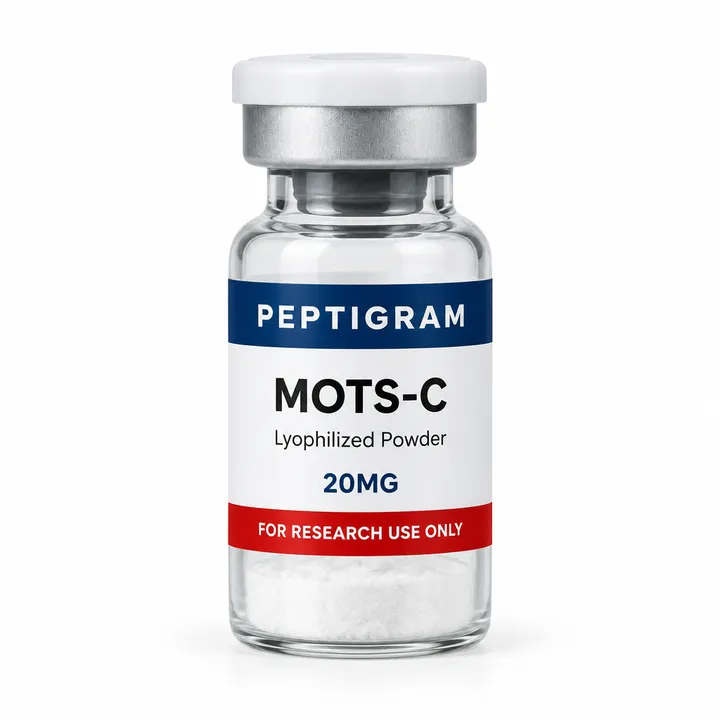
The basis is Directive 2001/83/EC, the EU code for medicinal products for human use. It defines a medicinal product by presentation and by function, and it requires a marketing authorisation before a medicine can be placed on the market. Authorisations come either from the European Medicines Agency through the centralised procedure or from a national authority. The EMA overview of marketing authorisation explains how this works. Research peptides such as BPC-157, TB-500 or MOTS-c have no authorisation anywhere in the EU.
"Research use only" (RUO) is not a legal category of its own. It is a label that states the intended use. The label helps, because it documents that the seller does not present the product as a medicine. It does not protect a seller who adds usage instructions for people or health claims, and it does not make human use legal. National authorities look at the whole picture: website texts, product names, advertising and the target group.
Buying peptides legally in Germany and Austria
Germany
The competent federal authority is the BfArM (Federal Institute for Drugs and Medical Devices); enforcement on the market lies with the authorities of the federal states. The Arzneimittelgesetz (AMG) defines medicinal products along the lines of the EU directive and makes trading unauthorised medicines an offence. Research peptides sold for laboratory use are not medicines in the sense of the AMG as long as they are not presented or used as such. In addition, the Anti-Doping-Gesetz (AntiDopG) restricts trade and, above certain amounts, possession of the substances listed in its annex, which includes several peptide hormones and growth factors. Check the annex for the specific compound.
Austria
In Austria the BASG (Federal Office for Safety in Health Care), with AGES as its operational arm, supervises medicines under the Austrian Arzneimittelgesetz. The Anti-Doping-Bundesgesetz 2021 contains rules for doping substances that work in a similar way to the German law.
Peptide legal status in Western and Southern Europe
France
The ANSM supervises medicines and health products. The Code de la santé publique defines a médicament (article L5111-1) in line with the directive. Products presented with therapeutic claims are treated as unauthorised medicines.
Belgium and the Netherlands
In Belgium the FAMHP (FAGG/AFMPS) is responsible, based on the Law on medicines of 25 March 1964. In the Netherlands the CBG-MEB assesses medicines and the IGJ (Health and Youth Care Inspectorate) enforces the Geneesmiddelenwet, including against online offers of unauthorised medicines.
Spain, Portugal and Italy
Spain regulates medicines through the AEMPS and Real Decreto Legislativo 1/2015 (Ley de garantías y uso racional de los medicamentos). Portugal has INFARMED and the Estatuto do Medicamento (Decreto-Lei 176/2006). In Italy the AIFA authorises medicines under Decreto Legislativo 219/2006, and Law 376/2000 regulates doping substances.
Peptide legal status in Central and Northern Europe
In Poland the URPL registers medicinal products and the GIF (Chief Pharmaceutical Inspectorate) supervises trade under the Pharmaceutical Law of 2001 (Prawo farmaceutyczne). In Czechia the SÚKL applies Act No. 378/2007 Coll. on pharmaceuticals (zákon o léčivech). Romania's authority is the ANMDMR, and the rules on medicines are in Title XVIII of Law 95/2006. Sweden has Läkemedelsverket and the Medicinal Products Act (läkemedelslag 2015:315); a separate law (1991:1969) prohibits certain doping substances, including growth hormone and related compounds. In Ireland the HPRA is the competent authority.
The pattern is the same in all these countries: a laboratory reagent without medical presentation is not a medicine, but a peptide that is advertised for human use is.
Peptides by country: legal status at a glance
| Country | Regulator | Medicines law | Research-use note | Customs note |
|---|---|---|---|---|
| Germany | BfArM | Arzneimittelgesetz (AMG) | RUO sale possible; AntiDopG annex applies to listed substances | No customs within the EU |
| Austria | BASG / AGES | Arzneimittelgesetz | RUO sale possible; Anti-Doping-Bundesgesetz 2021 | No customs within the EU |
| France | ANSM | Code de la santé publique | No therapeutic claims allowed | No customs within the EU |
| Belgium | FAMHP | Law of 25 March 1964 | No therapeutic claims allowed | No customs within the EU |
| Netherlands | CBG-MEB / IGJ | Geneesmiddelenwet | IGJ acts against online medicine offers | No customs within the EU |
| Spain | AEMPS | RDL 1/2015 | No therapeutic claims allowed | No customs within the EU |
| Portugal | INFARMED | Decreto-Lei 176/2006 | No therapeutic claims allowed | No customs within the EU |
| Italy | AIFA | D.Lgs. 219/2006 | Law 376/2000 on doping substances | No customs within the EU |
| Poland | URPL / GIF | Prawo farmaceutyczne | No therapeutic claims allowed | No customs within the EU |
| Czechia | SÚKL | Act 378/2007 Coll. | No therapeutic claims allowed | No customs within the EU |
| Romania | ANMDMR | Law 95/2006, Title XVIII | No therapeutic claims allowed | No customs within the EU |
| Sweden | Läkemedelsverket | Läkemedelslag 2015:315 | Doping law 1991:1969 for listed substances | No customs within the EU |
| Ireland | HPRA | Irish medicines legislation | No therapeutic claims allowed | No customs within the EU |
"RUO sale possible" means that the national medicines law does not cover a correctly labelled laboratory reagent. It is not a guarantee for every compound or every use.
Customs and anti-doping rules for peptides
Inside the EU single market, parcels between member states do not pass customs. This is the main practical difference between an EU seller and a seller in China, the United States, the United Kingdom or Switzerland. Parcels from outside the EU go through customs, import VAT is charged on every consignment, and duties can apply. If customs or the national regulator classifies the content as an unauthorised medicinal product, the parcel can be held, returned or destroyed, and the recipient can receive a letter from the authority. Switzerland (Swissmedic) and the UK (MHRA) have their own strict rules on importing medicines.
Anti-doping rules are a separate topic. The WADA Prohibited List names BPC-157 under S0 (non-approved substances) and lists thymosin beta-4 derivatives such as TB-500, growth hormone secretagogues and growth factors under S2. These rules bind athletes in tested sports. They are not a general ban on buying peptides, but some countries have turned parts of the list into criminal law, as shown above for Germany, Austria, Italy and Sweden. Our article What is BPC-157 explains the research background of the best-known example.
How to buy peptides legally for research: a checklist
If you buy peptides for a laboratory, these points keep you on the safe side and help you judge a supplier:
Seller in the EU: no customs, EU consumer law and a clear legal entity in the imprint.
Research-use labelling: every product page states laboratory research use, without health claims or instructions for human use.
Certificate of analysis: a COA per batch with identity by mass spectrometry and purity by HPLC. Our guide on how to read a peptide COA shows what to check.
Lyophilised powder in sealed vials: the standard format for research peptides, stable in transit.
Products with a COA on file are grouped in our lab-tested peptides collection. The full range, sorted by research area, is in all research peptides.
Frequently asked questions about buying peptides legally
Do I need a licence to buy research peptides in the EU?
Is BPC-157 legal in Germany?
Can customs seize peptides ordered from outside the EU?
Does the label "research use only" make any use legal?
Are the rules the same in Switzerland and the UK?
Sources
Directive 2001/83/EC of the European Parliament and of the Council on the Community code relating to medicinal products for human use. eur-lex.europa.eu
World Anti-Doping Agency. The Prohibited List. wada-ama.org
National medicines laws as named in the table above, in the version in force in October 2026.
This guide gives general information on the legal situation as of October 2026. It is not legal advice. Laws and their interpretation change, so check the current rules in your country. All products on this site are sold for laboratory research use only and are not intended for human or veterinary use.